Santa Barbara County nonprofits remain a steadfast force holding our communities together, even as the pressures they face continue to mount.
“We’ve been tracking the impacts on our nonprofit community closely ever since we first began hearing about cuts in January and February of 2025,” said Liz Thasiah, the Santa Barbara Foundation’s Vice President of Programs. She noted that the Foundation estimated Santa Barbara County could lose as much as $550 million in federal support.
“Our nonprofit organizations strengthen the fabric of our communities and right now they are relying on a collective response to ease the burden.”
The contrast of rising need and shrinking funding drove the launch of the Critical Needs Response Fund. Supported by family fundholders, private foundations, and local corporations — including Montecito Bank & Trust and the Patricia Bragg Foundation — the fund offers flexible grants of up to $50,000 to nonprofits facing financial disruptions or increased demand.
While the Critical Needs Response Fund cannot fill the gap, its purpose is to help organizations that support basic needs stay afloat as they find long-term solutions. Since its launch in September 2025, the fund has awarded more than $745,000 in grants to 27 organizations across the county — and support continues to grow.
Carpinteria Children’s Project was an early recipient of a Critical Needs Response Fund grant. The group operates two core programs — Early Childhood Education and a Family Resource Center — with a mission of connecting families to early education, quality care, diverse resources, and support services necessary for children to thrive, flourish and succeed. Increased ICE activity in Carpinteria over the summer led to a quick expansion of the organization’s regular services. Staff and volunteers mobilized a network of Promotores, who supported the community through rapid response training, rights education, and access to resources.

Community Health Workers & Promotores serve as trusted leaders within the neighborhoods where they live and work. Formally recognized under California’s Medi-Cal covered health services, they play a vital role in connecting communities with essential resources. Promotores are bilingual and bicultural, and are uniquely positioned to connect with immigrant families, answer questions, and provide up-to-date information.
“The promotores have continued to increase outreach, understanding that the community needs education on legal protections, connection with available resources, and mental health resources. This is critical, timely work that requires trust built through a history of relationship-building in our small community,” explained Teresa Alvarez, Executive Director of Carpinteria Children’s Project.
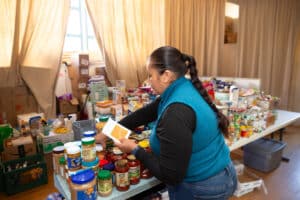
Today, their Family Resource Center is supporting 55 families through at-home grocery and essentials delivery, including 14 families directly impacted by immigration enforcement. Staff are providing mental health referrals and helping families prepare for potential separations by coordinating emergency child care, financial access, and other essential needs.
Veggie Rescue, led by Executive Director Eryn Shugart, also received a Critical Needs Response Fund grant. Veggie Rescue collects surplus produce from over 55 farms and delivers it — free of charge — to more than 65 nonprofit partners across Santa Barbara County.
Demand for Veggie Rescue’s donated produce surged as partner agencies lost federal support. By August 2025, the organization had already rescued more than 450,000 pounds of produce, surpassing the previous year, while transportation, staffing, and supply costs continued to rise.
Flexible funding from the Critical Needs Response Fund grant helped Veggie Rescue expand driver and program staff, cover fuel and vehicle costs, and grow the gleaning program to keep pace with rising demand.
Many nonprofits across the county are collaborating to strengthen and sustain their operations. One example is Good Samaritan Shelter — a partner of Veggie Rescue and a fellow grant recipient — which launched Bridgehouse Farm in Lompoc to provide both food and agricultural job training for residents of its shelter and housing programs.

When the farm produces more than it can use, the surplus is donated back to Veggie Rescue.
“Good Samaritan Shelter has directly and indirectly experienced significant financial impacts due to recent federal and public funding shifts,” said Sylvia Barnard, their Executive Director.
The reduction or elimination of a variety of key funding streams has constrained the organization’s ability to provide consistent services to community members facing new or increasing challenges.
Despite these funding shifts, Good Samaritan Shelter continues to move forward.
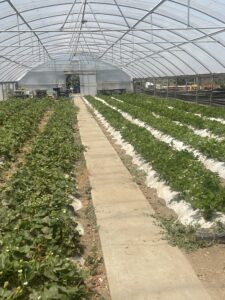
“Support from the Critical Needs Response Fund allowed us to stabilize farm operations, ensure continuity of food access for shelter and housing residents, and sustain hands-on job-training programs, all of which are essential components of Good Samaritan Shelter’s mission to empower individuals, support their independence, and strengthen our community,” explained Barnard.
While economic and funding uncertainties persist in Santa Barbara County, the Santa Barbara Foundation is optimistic about our shared future. We will continue to uplift the nonprofit sector, invest in its resilience, and embrace innovative solutions that will help meet our community’s evolving needs
Learn more about the Critical Needs Response fund here. For a full list of grant recipients, visit our nonprofit partners page.
 Santa Barbara Foundation LOGO